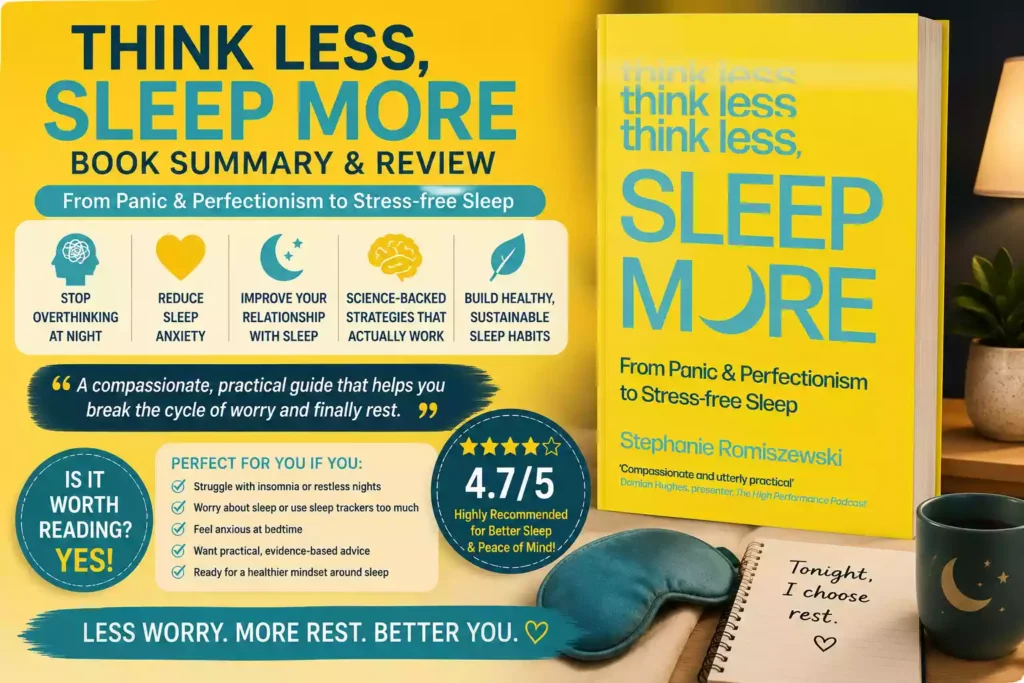
Sleep has become one of the biggest challenges of modern life. Millions of people struggle with insomnia, restless nights, and constant worry about whether they are getting enough sleep. In Think Less, Sleep More, sleep expert Stephanie Romiszewski offers a refreshing perspective on sleep that challenges many common beliefs and misconceptions.
Rather than focusing on sleep hacks, supplements, or complicated bedtime routines, the book explores the psychology behind sleep and explains why trying too hard to sleep often makes the problem worse.
If you’ve ever found yourself staring at the ceiling at 3 a.m., wondering why you can’t fall asleep, this book may provide valuable insights. In this article, we’ll explore the book’s main ideas, summarize its key lessons, review its strengths and weaknesses, and discuss whether it’s worth reading.
About the Book
Title: Think Less, Sleep More
Author: Stephanie Romiszewski
Genre: Health, Psychology, Self-Help
Themes: Sleep Science, Insomnia, Anxiety, Mental Health, Habit Change
Best For: People struggling with sleep problems, insomnia sufferers, and anyone interested in understanding sleep better.
Think Less, Sleep More Book Summary
At the heart of Think Less, Sleep More is a simple but powerful idea: many sleep problems become worse because people worry too much about sleep itself.
Stephanie Romiszewski explains that modern society often treats sleep as something that must be controlled, optimized, and perfected. As a result, many people become obsessed with sleep trackers, sleep scores, bedtime routines, and the fear of not getting enough rest.
The book argues that this obsession can actually create anxiety around sleep. The more pressure people place on themselves to sleep well, the harder it becomes to relax naturally.
One of the key concepts discussed is the difference between normal sleep difficulties and chronic insomnia. The author explains that occasional poor sleep is a normal part of life and does not necessarily indicate a serious problem.
Throughout the book, readers learn that sleep is a natural biological process that cannot be forced. Trying harder to sleep often creates frustration, stress, and hyper-awareness, making sleep even more difficult.
Romiszewski also challenges several popular myths, including:
- Everyone needs exactly eight hours of sleep.
- Poor sleep always damages health.
- Sleep tracking devices accurately measure sleep quality.
- You must follow strict bedtime routines to sleep well.
The author uses scientific research, clinical experience, and real-life examples to show that sleep needs vary from person to person.
Another major theme is the connection between anxiety and insomnia. Many people develop a cycle where they worry about not sleeping, which increases stress levels, making sleep less likely. The next day, they feel tired and become even more anxious about the upcoming night.
The book encourages readers to break this cycle by changing their relationship with sleep rather than constantly trying to control it.
Practical strategies discussed include:
- Reducing sleep-related anxiety
- Accepting occasional poor sleep
- Avoiding excessive sleep monitoring
- Building confidence in the body’s natural sleep system
- Developing healthier attitudes toward rest
By the end of the book, readers gain a more realistic and less stressful understanding of sleep, which can often improve sleep quality naturally.
Key Lessons from Think Less, Sleep More
Sleep Cannot Be Forced
The harder you try to sleep, the more difficult it often becomes.
Anxiety Is a Major Sleep Disruptor
Worrying about sleep frequently causes more problems than poor sleep itself.
Perfect Sleep Doesn’t Exist
Everyone experiences occasional bad nights, and this is completely normal.
Sleep Needs Vary
There is no universal sleep requirement that applies to every person.
Changing Your Mindset Matters
Improving your relationship with sleep can be more effective than chasing sleep hacks.
Think Less, Sleep More Review
One of the book’s greatest strengths is its practical and reassuring approach. Rather than creating fear about sleep deprivation, Stephanie Romiszewski helps readers understand that sleep is a natural process that doesn’t need constant management.
The writing is clear, accessible, and backed by scientific evidence without becoming overly technical.
The book stands out because it avoids promoting miracle solutions. Instead, it focuses on helping readers understand why they may be struggling with sleep and how to reduce unnecessary anxiety.
Pros
✔ Easy to understand
✔ Evidence-based advice
✔ Challenges common sleep myths
✔ Practical and realistic guidance
✔ Helpful for people with insomnia
✔ Reduces fear and anxiety around sleep
Cons
✘ Some readers may want more step-by-step sleep plans
✘ The approach may feel counterintuitive initially
✘ Readers looking for quick fixes may be disappointed
Overall Rating
⭐⭐⭐⭐⭐ (4.7/5)
An insightful and reassuring book that offers a healthier, more realistic perspective on sleep.
Is Think Less, Sleep More Worth Reading?
Yes, especially if you struggle with sleep anxiety or insomnia.
Unlike many sleep books that focus on complicated routines and optimization techniques, Think Less, Sleep More encourages readers to trust their bodies and stop obsessing over sleep.
The book is particularly valuable for people who:
- Constantly worry about sleep
- Use sleep trackers excessively
- Experience insomnia
- Feel anxious at bedtime
- Want evidence-based sleep advice
If you’ve tried numerous sleep hacks without success, this book offers a refreshing alternative approach that may help you break the cycle of sleep-related stress.
Who Should Read This Book?
This book is ideal for:
- Insomnia sufferers
- People experiencing sleep anxiety
- Health and wellness readers
- Psychology enthusiasts
- Anyone interested in sleep science
- Readers looking for practical self-help advice
Final Verdict
Think Less, Sleep More by Stephanie Romiszewski provides a powerful reminder that sleep works best when we stop trying to control it.
Through science-backed insights and practical advice, the book helps readers understand why sleep problems often persist and how changing one’s mindset can make a significant difference.
If you’re tired of worrying about sleep and want a healthier relationship with rest, this book is definitely worth reading.
Thanks for Reading!
Recommended Posts
- FLIPPED by Wendelin Van Draanen Book Summary & Review: Is it Worth Reading?
- Sisters in Yellow Book Summary & Review: Is This Historical Novel Worth Reading?
- She Walks at Night Book Summary & Review: Is This Thriller Worth Reading?
- Dissection of a Murder by Jo Murray Book Summary & Review: Is This Crime Thriller Worth Reading?
- First and Forever by Lynn Painter Book Summary & Review