आज के समय में NEET, JEE, CUET और Board Exams की तैयारी करने वाले ज्यादातर स्टूडेंट्स एक ऐसी किताब ढूँढते हैं जिसमें पूरी Inorganic Chemistry आसान भाषा में, उदाहरणों के साथ और exam-oriented तरीके से समझाई गई हो।
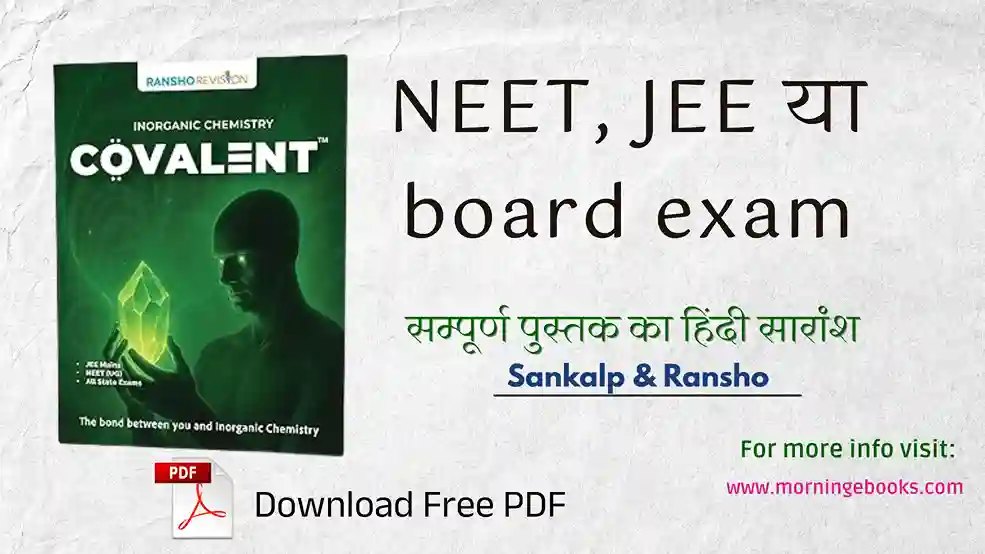
इसी जरूरत को ध्यान में रखकर Prashant Jain Sir ने तैयार की है – COVALENT 3.0 – Complete Inorganic Chemistry Book।
इस ब्लॉग में हम इस पूरी किताब का simple Hindi में विस्तृत Summary पढ़ेंगे। साथ ही अंत में आपको PDF डाउनलोड लिंक, FAQs और exam-oriented टिप्स भी मिलेंगे।
⭐ COVALENT 3.0 – Complete Inorganic Chemistry Book Summary
यह किताब खासतौर पर उन छात्रों के लिए बनाई गई है जिन्हें Inorganic Chemistry भारी-भरकम लगती है। ज्यादातर छात्रों की दिक्कत यही होती है कि वे रट लेते हैं लेकिन exam में question बदलते ही confusion हो जाता है।
इस किताब की खासियत यह है कि इसमें:
- हर concept को flowchart, table और real-life उदाहरण से समझाया गया है।
- Chapterwise NEET + JEE level Problems दिए गए हैं।
- Trend-based questions की भी practice मिलती है।
- Language बहुत ही simple है—जैसे कोई teacher सामने बैठकर समझा रहा हो।
चलिए अब एक-एक chapter का आसान summary देखते हैं।
Periodic Table का आसान और समझदार परिचय
Inorganic Chemistry की शुरुआत हमेशा Periodic Table से होती है। इस किताब में periodic table को तीन भागों में समझाया गया है:
✔ 1. History + Logic Based Understanding
लेखन का तरीका केवल याद करने वाला नहीं है, बल्कि यह बताता है कि periodic table ऐसा क्यों है।
उदाहरण:
- क्यों Hydrogen एक अलग category में है?
- क्यों d-block में 3d पहले fill होता है और 4s बाद में?
यह logic exam में tricky सवालों को solve कराने के लिए बहुत मददगार है।
✔ 2. Blocks के Features
इसमें s, p, d और f-block के सभी important points bullet notes में हैं:
- atomic size trend
- ionization energy
- electron gain enthalpy
- metallic character
- electronegativity
हर trend को ऐसे समझाया गया है जैसे आप किसी graph को अपने सामने unfold होते देख रहे हैं।
✔ 3. PYQs का Chapter End Collection
हर chapter के अंत में पिछले 10–12 साल के NEET-JEE के सवाल दिए हुए हैं।
Chemical Bonding – नींव मजबूत करने वाला सबसे महत्वपूर्ण भाग
COVALENT 3.0 का सबसे बड़ा और सबसे आसान हिस्सा है – chemical bonding।
यहाँ bond के हर concept को example-based तरीके से समझाया गया है:
🌱 1. Ionic Bond
- कब कोई compound ionic बनेगा?
- lattice energy कैसे decide होती है?
- कौन सा compound ज्यादा stable होगा?
Example:
NaCl और MgO दोनों ionic हैं—लेकिन MgO का melting point ज्यादा क्यों है?
→ क्योंकि Mg²⁺ और O²⁻ में charge ज्यादा, size कम और attraction ज्यादा।
🔥 2. Covalent Bond
- bond order
- bond length
- bond energy
इन तीनों के rules को ऐसे diagrams से समझाया गया है कि एक बार पढ़कर फटाक से याद रह जाता है।
🎈 3. VSEPR Theory
किताब में हर shape के साथ colorful diagrams हैं:
- linear
- tetrahedral
- bent
- trigonal pyramidal
नीचे table दी होती है—जिससे एक ही glance में पूरा overview मिल जाता है।
⚡ 4. Hybridization
sp, sp², sp³ को बहुत आसान उदाहरण से समझाया गया है:
- CO₂ → sp
- BF₃ → sp²
- CH₄ → sp³
उदाहरण में bond angle और geometry दोनों एक साथ दिए हुए हैं।
🌀 5. Molecular Orbital Theory
इस theory को shortcut memory tricks से समझाया गया है।
जैसे:
- O₂ paramagnetic क्यों है?
- N₂ strongest bond क्यों रखता है?
P-Block Elements – सबसे बड़ा और सबसे डरावना अध्याय अब आसान
P-block को इस किताब में बहुत ही systematic तरीके से समझाया गया है:
✔ Trends और Properties टेबल में
हर group के लिए एक “memory table” है जिससे आप trend याद कर सकते हैं:
- Oxidation states
- Allotropy
- Hydrides
- Halides
- Oxides
- Acids / Basicity
✔ Real-life examples
जैसे –
- Nitrogen cycle
- Sulphur in match sticks
- Phosphorus in fertilizers
- Carbon allotropes (Diamond, Graphite, Fullerene)
इससे चीजें आपको याद रहती हैं और exam में confusion नहीं होता।
D-Block और F-Block Elements – Short Tricks + Table Format
इस भाग में transition metals और lanthanides/actinides को short tables में समझाया गया है।
✔ Color of Ions
किताब में “Color Table” दी है जिसमें सभी important ions का रंग एक ही जगह मिल जाता है:
- Cu²⁺ → नीला
- Cr³⁺ → हरा
- MnO₄⁻ → बैंगनी
- Fe³⁺ → पीला
Exam में color वाले सवाल हमेशा आते हैं—इससे instantly याद रहता है।
✔ Complex Formation
Ligands + Coordination number + Geometry = एक chart में
इससे हर complex की geometry 10 सेकंड में समझ में आ जाती है।
Hydrogen, S-Block, S-Block Water Reaction – छोटा लेकिन scoring हिस्सा
Hydrogen के तीन isotopes (protium, deuterium, tritium)
साथ में reactions, hydrides और anomalies को example-based explanation में दिया गया है।
S-block में:
- क्यों Li और Mg आपस में resemble करते हैं?
- क्यों Be amphoteric होता है?
- क्यों Ca का flame brick-red होती है?
सबके answers clear diagrams से समझाए गए हैं।
Coordination Compounds – आसान formula + color trick
किताब में सबसे simplified explanation coordination compounds का है:
✔ IUPAC Naming के नियम
हर rule को एक short example के साथ समझाया गया है।
जैसे:
K₄[Fe(CN)₆] → Potassium hexacyanoferrate(II)
✔ Isomerism
इसकी सबसे बड़ी दिक्कत—confusion!
लेकिन यहाँ table + diagram format में है:
- geometric isomerism
- optical isomerism
- linkage isomerism
Exam में हमेशा 1–2 सवाल इस topic से आते हैं।
Metallurgy – धातुओं का आसान सार
इस chapter में:
- roasting
- calcination
- concentration of ore
- extraction
- refining
सबको flowchart में दिया गया है।
Real-life examples:
- Aluminium extraction
- Gold purification (Wohlwill process)
Environmental Chemistry – आसान भाषा में समझाया गया
इसमें pollution से जुड़े concepts बड़ी सरल भाषा में हैं।
- greenhouse effect
- acid rain
- ozone depletion
- water pollution
- sewage treatment
Board exams के अनुसार perfect है।
COVALENT 3.0 Book की महत्वपूर्ण खास बातें
- हर chapter के अंत में NEET + JEE Practice Questions
- “Remember Box” जिसमें सबसे important points summary में
- Real-life examples
- Tables और diagrams का heavy use
- Trend-based theory
- Color coding
- Zero-level से शुरू होकर topper-level तक पहुँचने वाली explanation
📌 किस छात्रों को यह किताब जरूर पढ़नी चाहिए?
यह किताब खासतौर पर इन students के लिए perfect है:
- NEET aspirants
- JEE Mains कॉलेज वाले
- CUET Science वाले
- Board + competitive दोनों की तैयारी करने वाले
- Inorganic Chemistry से डरने वाले
- Weak basics वाले beginners
अगर आप भी inorganic पढ़ते समय confuse होते हैं—यह book आपके लिए वरदान है।
🎯 Book पढ़ने का सही तरीका (Exam-Oriented Strategy)
- पहले concept पढ़ें
- Example तुरंत पढ़ें
- Notes में formula और important reactions लिखें
- Chapter end practice जरूर करें
- हर week color-memory chart revise करें
70% inorganic सिर्फ revision की chemistry है।
COVALENT 3.0 – Complete Inorganic Chemistry Book PDF Download
➡ नोट: हम किसी भी copyrighted material को illegally upload या share नहीं करते।
अगर आपको किताब का official PDF, eBook या hardcopy चाहिए तो आप इसे author के official platform या authorized seller से ही लें।
❓ FAQ (सबसे ज्यादा पूछे जाने वाले सवाल)
1. क्या यह किताब NEET और JEE दोनों के लिए सही है?
हाँ, यह किताब दोनों exams के लिए बहुत अच्छी मानी जाती है, क्योंकि इसकी theory और questions dual-level हैं।
2. क्या beginners भी इस किताब को समझ सकते हैं?
हाँ, बिल्कुल। यह किताब basic से शुरू होकर advanced तक ले जाती है।
3. क्या यह किताब board exam के लिए भी useful है?
हाँ, क्योंकि इसमें NCERT आधारित explanation है।
4. क्या इस किताब से full inorganic cover हो जाता है?
हाँ, इसमें पूरा inorganic syllabus chapterwise दिया हुआ है।
5. क्या इसका PDF legal है?
केवल वही PDF legal माना जाता है जो author या publisher officially दें।
🔚 निष्कर्ष (Conclusion)
COVALENT 3.0 – Complete Inorganic Chemistry Book उन students के लिए perfect guide है जो inorganic को मज़बूत, आसान और scoring बनाना चाहते हैं। यदि आप NEET, JEE या board exam की तैयारी कर रहे हैं—यह किताब आपकी तैयारी को अगले level पर ले जा सकती है।
अगर आपको यह summary मददगार लगी हो तो इसे अपने दोस्तों के साथ जरूर शेयर करें।
Thanks for Reading!❤️
- Think Better Than Your Brain by Shwetabh Gangwar Book Summary Review & PDF Download
- 21 Days to Good Health by MD Dr Shriram Nene Book Summary Review & PDF Download
- The Science of Getting Rich by Wallace D. Wattles Book Summary Review & PDF Download Guide
- Adam and Eve by Jeffrey Archer Book Summary, Review & PDF Download Guide
- The Bhagavad Gita Retold by Om Swami Book Summary, Review & PDF Download