American politics has rarely been as closely scrutinized as it was during Donald Trump’s presidency. From dramatic policy decisions and media battles to unprecedented political controversies, the Trump administration became one of the most discussed periods in modern U.S. history.
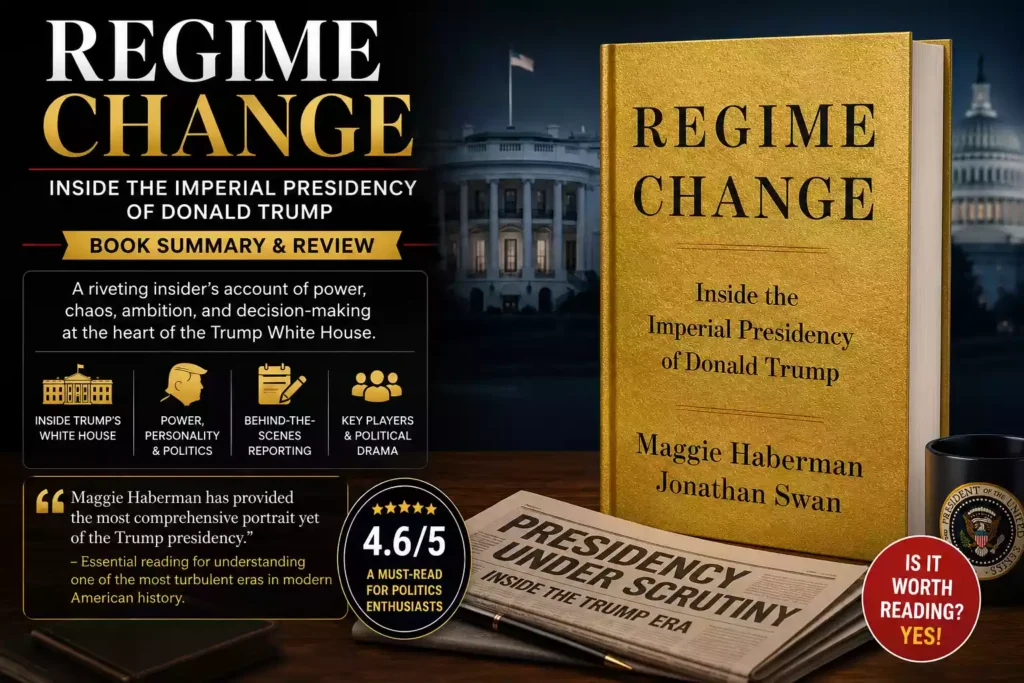
In Regime Change: Inside the Imperial Presidency of Donald Trump, Pulitzer Prize-winning journalist Maggie Haberman provides an insider’s account of Trump’s presidency, leadership style, decision-making process, and relationship with those closest to him. Drawing from years of reporting and interviews with officials, advisers, and people within Trump’s circle, the book attempts to explain how his White House operated behind closed doors.
If you’re interested in political journalism, presidential history, or contemporary American politics, this book offers an in-depth look at one of the most consequential presidencies of the 21st century.
In this review, we’ll summarize the book, discuss its major themes, examine its strengths and weaknesses, and help you decide whether it’s worth reading.
About the Book
Title: Regime Change: Inside the Imperial Presidency of Donald Trump
Author: Maggie Haberman
Genre: Political Journalism, Biography, American Politics
Themes: Donald Trump, White House, Leadership, Political Power, Presidential Decision-Making, U.S. Government
Regime Change Book Summary
Regime Change chronicles Donald Trump’s rise to the presidency and examines how his personal leadership style influenced the operation of the White House. Maggie Haberman combines years of reporting with interviews from people who worked closely with Trump, creating a detailed narrative of his administration.
Rather than presenting a traditional biography, the book focuses primarily on Trump’s time in office. It explores how decisions were made, how advisers competed for influence, and how the administration responded to political crises.
A recurring theme throughout the book is Trump’s unconventional approach to governing. Haberman describes a president who often relied on instinct, personal relationships, and direct communication rather than traditional governmental procedures. The book examines how this approach affected policy discussions, staffing decisions, and the overall functioning of the executive branch.
The narrative also explores Trump’s relationship with the media, highlighting the constant tension between the White House and news organizations. Haberman discusses how public messaging, television appearances, and social media became central tools of political communication during the administration.
Another major topic is the high turnover among senior officials. Readers are introduced to the internal disagreements, shifting alliances, and competing personalities that characterized much of Trump’s presidency. These leadership changes shaped policy debates and often influenced the direction of the administration.
The book also examines several significant political events from Trump’s presidency, including election campaigns, legislative battles, national controversies, and moments that tested the administration’s leadership. Rather than focusing on a single event, Haberman presents these developments within the broader context of how the presidency functioned.
Throughout the book, Haberman emphasizes the importance of personality in politics. She argues that understanding Trump’s background, communication style, and leadership philosophy helps explain many of the decisions made during his administration.
While the book presents detailed reporting and behind-the-scenes accounts, readers should remember that it reflects the author’s journalistic perspective and interpretation of events. As with many works covering recent political history, readers may benefit from consulting multiple sources to develop a broader understanding of the period.
Key Lessons from Regime Change
Leadership Style Shapes Government
The personality and decision-making habits of a president can significantly influence how an administration functions.
Communication Matters
Public messaging became one of the defining characteristics of Trump’s presidency, changing how political communication was conducted.
Internal Politics Affect Public Policy
Behind every major decision are advisers, competing viewpoints, and internal negotiations that are rarely visible to the public.
Institutions Face Constant Pressure
The book illustrates how political institutions respond when confronted with unconventional leadership styles.
Political History Is Complex
Recent political events often involve multiple perspectives, making critical thinking and careful evaluation essential.
Regime Change Book Review
Regime Change is a deeply researched work of political journalism that benefits from Maggie Haberman’s extensive experience covering Donald Trump over many years.
One of the book’s greatest strengths is the level of detail. Haberman provides readers with numerous behind-the-scenes accounts, offering insight into meetings, conversations, and decision-making processes that shaped the Trump presidency.
The writing is engaging despite the book’s substantial length. Political readers will appreciate the chronological structure and the careful explanation of complex events.
However, because the book examines a highly debated political figure, readers with different viewpoints may interpret some conclusions differently. Those seeking a broader historical perspective may also wish to compare this book with works by other journalists and historians.
Overall, the book succeeds as a detailed journalistic account of a remarkable period in American political history.
Pros
✔ Thorough research and reporting
✔ Detailed behind-the-scenes insights
✔ Easy-to-follow narrative
✔ Strong political analysis
✔ Valuable for readers interested in recent U.S. history
Cons
✘ Covers politically controversial topics
✘ Large amount of detail may feel overwhelming for casual readers
✘ Readers may benefit from considering additional perspectives on recent events
Regime Change Overall Book Rating
⭐⭐⭐⭐☆ (4.6/5)
A compelling political narrative that offers significant insight into the inner workings of the Trump White House.
Is Regime Change Worth Reading?
Yes—especially if you’re interested in modern American politics and presidential history.
The book provides readers with an extensive account of Donald Trump’s presidency through the reporting of an experienced political journalist.
It is particularly recommended for:
- Political science students
- Journalists
- History enthusiasts
- Readers interested in U.S. government
- Anyone following contemporary American politics
Readers looking for a behind-the-scenes examination of presidential leadership and decision-making will likely find the book informative and thought-provoking.
Who Should Read This Book?
This book is ideal for:
- Political readers
- History enthusiasts
- Journalism students
- Readers interested in presidential leadership
- Public policy professionals
- Anyone studying modern American politics
Final Verdict
Regime Change: Inside the Imperial Presidency of Donald Trump offers an in-depth journalistic examination of one of the most closely watched presidencies in American history.
Whether readers ultimately agree with every interpretation or not, the book provides valuable reporting, detailed research, and extensive background on how the Trump administration operated behind the scenes.
For anyone interested in understanding recent U.S. political history, this book is a worthwhile addition to their reading list.
Frequently Asked Questions (FAQs)
Is Regime Change a biography?
Not exactly. While it discusses Donald Trump’s background, the primary focus is his presidency and the operation of his administration.
Is the book based on interviews?
Yes. Maggie Haberman draws from years of reporting and interviews with officials, advisers, and people familiar with the Trump White House.
Is this book suitable for beginners interested in politics?
Yes. While detailed, the writing remains accessible for readers with a general interest in political history.
Is Regime Change worth reading?
If you’re interested in presidential leadership, political journalism, and recent American history, it is certainly worth considering.
Thanks for Reading!💖
Recommended Posts
- Sisters in Yellow Book Summary & Review: Is This Historical Novel Worth Reading?
- She Walks at Night Book Summary & Review: Is This Thriller Worth Reading?
- Dissection of a Murder by Jo Murray Book Summary & Review: Is This Crime Thriller Worth Reading?
- First and Forever by Lynn Painter Book Summary & Review